EN
EN



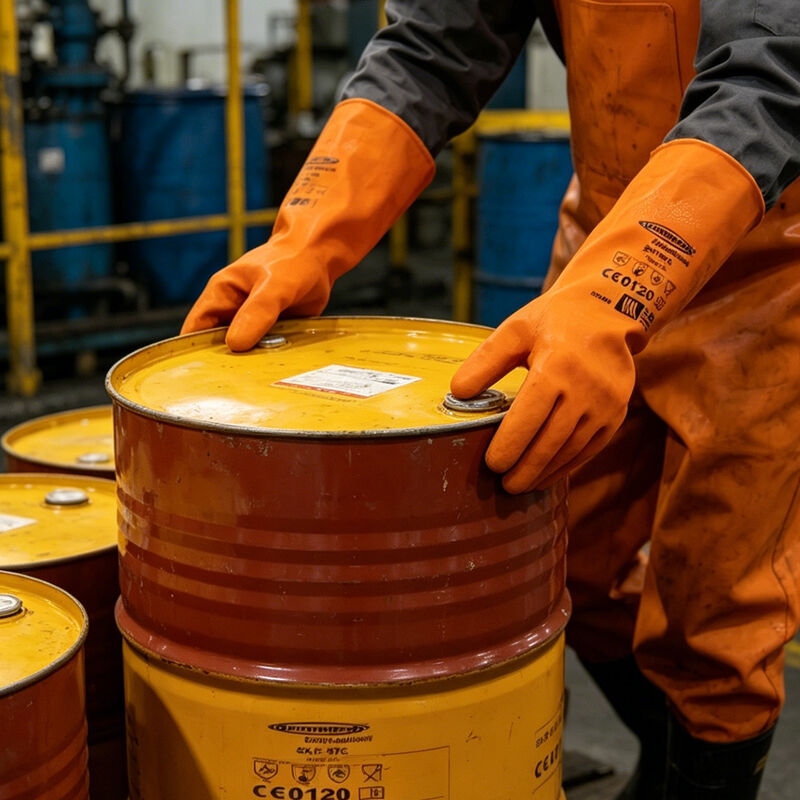
Overcoming a Chemical Breakthrough Crisis on the Maintenance Deck
During my time managing safety protocols at a busy marine repair facility, our crew faced a frightening situation during a routine hull-stripping operation.
We were using a heavy-duty solvent mixture to dissolve marine growth. Our team was wearing standard, multi-purpose hand protection.
Within twenty minutes, several workers reported a strange burning sensation on their skin. Upon inspection, we discovered that the harsh solvents had completely degraded the glove material and permeated through the glove.
This stressful bottleneck completely halted our maintenance schedule and sent shockwaves through our safety committee.
That hands-on emergency taught me that handling hazardous substances requires zero guesswork. Relying on basic protective gear for aggressive compounds is an absolute failure of operational oversight.
Upgrading our team to specialized, certified nitrile work gloves completely turned our safety record around. This proved that understanding chemical degradation times is essential for protecting personnel on any industrial site.
Decoding the Physical Science of Permeation under the EN ISO Standard
Selecting the right work gloves for chemical handling demands a deep dive into material science and international testing frameworks.
The EN ISO 374 standard provides a rigorous system that classifies hand protection based on its breakthrough time when exposed to specific test liquids. Breakthrough time is the time it takes for a chemical to pass through the glove material at a molecular level, measured in minutes.
Chemical safety researchers point out that permeation happens at the molecular level, where the liquid passes through the glove material without visible holes or tears.
Under this global protocol, certified nitrile work gloves must achieve a Type A, Type B, or Type C classification per EN ISO 374-1:2016. These classifications depend on how many different chemicals the glove can withstand for a breakthrough time of at least 30 minutes.
For heavy maritime and industrial maintenance, using a thick, high-density nitrile material ensures that the material actively repels corrosive elements, oils, and petrochemical solvents rather than absorbing them. This provides a reliable shield that keeps hazardous liquids far away from the skin.
Balancing Heavy Mechanical Defense with Specialized Grip Engineering
In demanding environments like maritime shipping and industrial refining, a chemical-resistant work glove cannot just stop liquids. It must also withstand intense physical wear and tear.
When field crews are handling slippery, oil-coated valves or wet tools, using standard smooth nitrile leads to dropped items and poor efficiency.
Industrial ergonomics specialists emphasize that a premium safety glove must combine chemical resilience with a specialized texturized grip pattern on the fingers and palms.
Micro-textured surfaces create a displacement effect, channeling oils and liquids away from the contact zone to maximize friction.
Furthermore, the base material needs high abrasion and puncture ratings under the parallel EN 388 standard. This ensures the glove survives constant friction against rough metal surfaces without cracking or tearing apart prematurely.
Maximizing Operational Comfort and Reducing Hand Fatigue over Long Shifts
A common hurdle for safety supervisors is getting workers to wear thick protective gear consistently throughout a long ten-hour shift.
If a glove is too stiff or causes severe sweating, laborers will constantly remove it, inviting accidental exposure.
Advanced industrial safety wear solves this problem by integrating a soft, moisture-absorbing internal flocked cotton lining into the heavy-duty nitrile shell.
Textile engineers note that an anatomical design mimicking the natural curvature of the hand drastically lowers hand fatigue and prevents muscle strain during repetitive grip tasks.
By choosing a breathable, flexible synthetic formulation, multi-branch industrial operations can keep their field teams cool and dry. This directly boosts workplace compliance and ensures that safety gear stays firmly on the hands where it belongs.
Securing Supply Chain Peace of Mind and Building Safety Culture
Investing in fully certified, task-specific chemical-resistant gloves does more than prevent burns. It eliminates the operational chaos caused by unexpected glove failure.
When your crews step onto a hazardous maintenance deck or into a chemical mixing zone wearing pristine, high-performance hand protection, they work with confidence and precision.
This visible commitment to proper chemical barrier selection builds deep organizational trust. It also sharpens situational awareness among team members on the ground.
Eliminating uncertified or degraded work gloves drastically cuts down on preventable chemical exposures. It minimizes corporate liability risks and ensures your daily project deadlines are achieved without tragic disruptions.
By anchoring your job site safety program with reliable, task-optimized hand protection, your enterprise can confidently scale its heavy operations and build an unshakeable international reputation for workplace excellence.