
 EN
EN



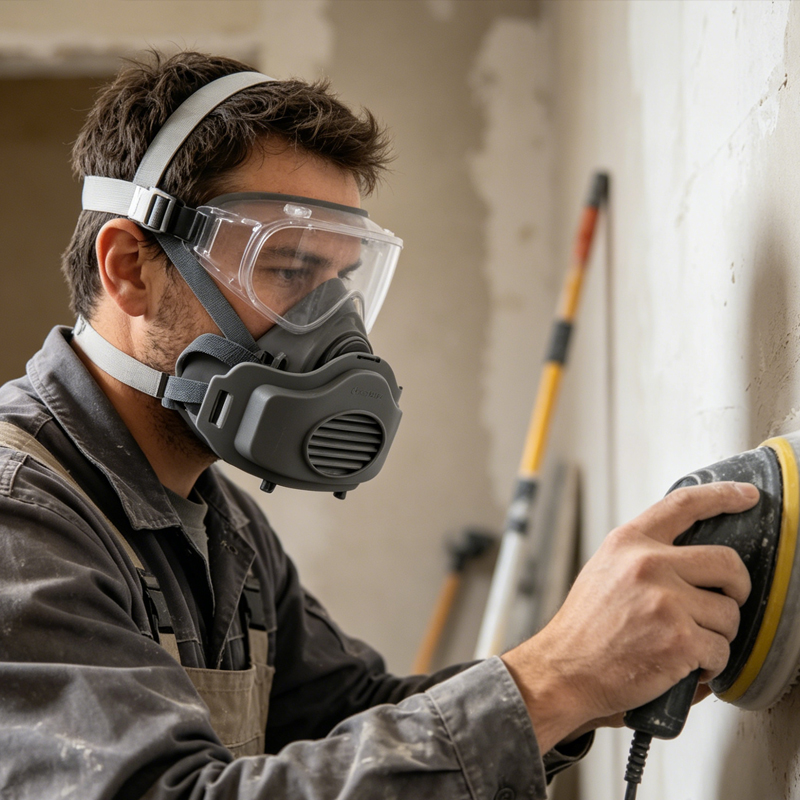
Respiratory protection is an essential part of workplace safety in industries where employees may be exposed to airborne particles, dust, fumes, and other contaminants. Among different types of respiratory protective equipment, N95 respirators are widely used because they provide effective particle filtration while maintaining practical comfort for daily operations.
The filtration performance of an N95 respirator depends greatly on the materials used in its construction. One of the most important components is non woven material, which creates a specialized fiber structure designed to capture airborne particles while allowing users to breathe comfortably.
Unlike traditional woven fabrics, non woven materials are manufactured through processes that arrange fibers into complex structures without traditional weaving. This structure creates multiple pathways for particle capture and allows manufacturers to develop filtration materials with high efficiency and controlled airflow resistance.
In professional respiratory protection applications, material technology, respirator design, and face seal performance all work together to determine the overall protection capability of the final product.
Why Non Woven Materials Are Important in N95 Respirators
The main purpose of a respirator is to reduce the amount of airborne particles inhaled by the wearer. To achieve this goal, N95 respirators typically use multiple layers of specialized materials, with each layer serving a different function.
The outer layers help provide structural support and protect the internal filtration media from environmental damage. The middle filtration layer, commonly made from melt-blown non woven material, plays a major role in capturing airborne particles.
Melt-blown fibers are extremely fine and create a dense three-dimensional network. This structure increases the probability that particles traveling through the airflow will interact with the fibers and become captured.
The performance of the filtration layer depends not only on fiber size but also on fiber distribution, material thickness, electrostatic properties, and manufacturing consistency.
High-quality non woven materials must achieve a balance between filtration efficiency and breathing comfort. If the material is too dense, breathing resistance may increase. If the structure is too open, filtration performance may be reduced.
Understanding How N95 Respirators Filter Airborne Particles
Many people assume that respirators work simply by blocking particles through a physical barrier. However, modern filtration materials use several mechanisms to capture particles effectively.
One important mechanism is interception, where particles traveling through the airflow come close enough to contact the fibers and become trapped.
Another mechanism is inertial impaction. Larger particles with greater momentum may not follow the changing direction of airflow and can collide with fibers inside the filtration layer.
Diffusion also contributes to particle capture. Very small particles move randomly due to Brownian motion, increasing the chance that they will contact and attach to fibers.
In addition, many N95 filtration materials use electrostatic charging technology. Electrically charged fibers can attract and capture particles more efficiently without significantly increasing the density of the material.
The combination of these filtration mechanisms allows N95 respirators to achieve high particle filtration efficiency while maintaining practical breathing performance.
Understanding N95 Respirator Filtration Requirements
The term “N95” refers to a specific class of respiratory protection performance defined by NIOSH requirements.
The letter “N” indicates that the respirator is not resistant to oil-based aerosols, while the number “95” refers to the minimum filtration efficiency requirement under the NIOSH testing conditions.
N95 respirators are tested against specific airborne particle challenges to verify that they can achieve at least 95% filtration efficiency under certification requirements.
However, filtration efficiency alone does not determine the actual protection level experienced by users. Factors such as respirator fit, face seal performance, correct wearing method, and workplace conditions also influence overall protection effectiveness.
For this reason, respiratory protection programs focus not only on product performance but also on proper selection, fit testing, and correct usage.
The Relationship Between Material Technology and Respirator Performance
Although filtration material is a key component of an N95 respirator, the final performance depends on the complete product design.
A high-performance filtration layer must work together with other components, including the facepiece structure, nose clip design, head straps, and overall shape.
A respirator with excellent filtration material may still provide reduced protection if it does not create a reliable seal with the user's face.
Professional manufacturers therefore consider multiple factors during product development, including material quality, production consistency, airflow resistance, and user comfort.
The manufacturing process is also important. Small differences in fiber distribution, electrostatic treatment, or layer bonding may affect the final performance of respiratory protection products.
Strict quality control helps ensure that large-scale production maintains consistent filtration performance.
The Importance of Comfort in Long-Term Respirator Use
In industrial environments, workers may need to wear respiratory protection for extended periods. Therefore, comfort is an important factor in achieving consistent and correct usage.
A respirator with high filtration performance but poor comfort may create challenges such as increased breathing effort, heat buildup, or user discomfort.
Non woven filtration materials must therefore provide an effective balance between particle protection and breathability.
Modern respirator designs focus on improving:
- Airflow performance
- Lightweight construction
- Wearing comfort
- Stable fit
- Long-term usability
When protective equipment is comfortable and practical, workers are more likely to use it correctly throughout their working shifts.
Industrial Applications of N95 Respirators
N95 respirators are commonly used in various industries where airborne particle exposure may occur.
In manufacturing environments, workers may encounter fine particles generated during production processes, material handling, or equipment operation.
In construction applications, respiratory protection may be required when workers are exposed to dust from cutting, grinding, drilling, or other activities.
Maintenance operations may also require respiratory protection when employees work in environments with changing airborne hazards.
Because workplace conditions vary significantly, companies should always evaluate the specific hazards before selecting respiratory protection equipment.
Choosing Reliable N95 Respirators for Workplace Protection
Selecting a suitable N95 respirator requires considering more than just filtration efficiency. Companies should evaluate material quality, product design, certification requirements, workplace conditions, and user comfort.
Reliable respiratory protection products combine advanced filtration technology with practical design features that support daily workplace use.
For professional buyers, manufacturing consistency is also an important consideration. Large-scale industrial users need products that provide stable performance across repeated purchases.
IBOATE focuses on providing professional protective equipment solutions for industrial applications. Through quality control, product development, and attention to customer requirements, IBOATE supports companies seeking reliable respiratory protection products.
Non woven material technology continues to play an important role in the development of modern respiratory protection. By combining advanced materials with thoughtful product design, manufacturers can help create safer and more comfortable working environments.
Table of Contents
- Why Non Woven Materials Are Important in N95 Respirators
- Understanding How N95 Respirators Filter Airborne Particles
- Understanding N95 Respirator Filtration Requirements
- The Relationship Between Material Technology and Respirator Performance
- The Importance of Comfort in Long-Term Respirator Use
- Industrial Applications of N95 Respirators
- Choosing Reliable N95 Respirators for Workplace Protection