
 EN
EN



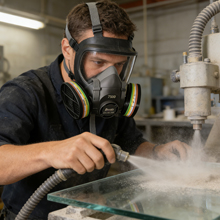
Respiratory protection plays a critical role in many industrial environments where workers may be exposed to airborne hazards such as dust, particles, fumes, and certain chemical substances. In these workplaces, selecting a reliable respirator is essential for maintaining employee safety and reducing exposure risks.
Among different types of respiratory protection equipment, NIOSH approved half mask respirators are widely used because they provide a practical balance between protection, comfort, and daily usability. These respirators are commonly applied in industries such as manufacturing, construction, maintenance, chemical processing, and other environments where airborne contaminants may exist.
Although filtration efficiency is an important factor in respirator performance, the effectiveness of a respirator depends on more than the filter material itself. The connection between the respirator and the user's face, known as face seal performance, plays a critical role in determining the overall level of protection.
A properly fitted respirator creates a secure seal around the face, helping ensure that contaminated air passes through the filtration system instead of entering through gaps between the facepiece and the skin.
Why Face Seal Performance Matters for Half Mask Respirators
A respirator can only provide its designed level of protection when it fits the user correctly. Even a high-performance filter cannot achieve the expected protection level if air leaks occur around the edges of the facepiece.
Face seal performance is influenced by several factors, including facial structure, respirator size, facepiece material, strap adjustment, and wearing position. Because every person's facial shape is different, selecting the correct respirator model and size is an important part of an effective respiratory protection program.
In real industrial environments, workers may need to wear respiratory protection for several hours during their shifts. If a respirator creates excessive pressure, discomfort, or difficulty breathing, users may adjust it incorrectly or reduce wearing time. Therefore, professional respirator designs need to balance protection performance with comfort and usability.
A reliable half mask respirator should provide stable sealing performance while allowing workers to perform their daily tasks efficiently.
NIOSH Standards and Respirator Protection Requirements
NIOSH approved respirators are evaluated according to strict performance requirements under 42 CFR Part 84. These requirements cover factors such as filtration performance, breathing resistance, and overall respirator quality.
For tight-fitting respirators, proper fit testing is a key requirement before use. OSHA 29 CFR 1910.134 requires employers to conduct fit testing to verify that a specific respirator model and size can properly seal to the individual user's face.
Fit testing is generally divided into two methods: qualitative fit testing and quantitative fit testing.
Qualitative fit testing uses a user's ability to detect a test substance, such as taste or odor, to determine whether the respirator forms an acceptable seal. Quantitative fit testing uses measurement equipment to calculate the actual fit factor between the respirator and the user's face.
These procedures help confirm that the selected respirator provides an appropriate level of protection for the worker.
Understanding Assigned Protection Factor (APF) of Half Mask Respirators
One important concept when selecting respiratory protection is the Assigned Protection Factor (APF).
A NIOSH approved half mask respirator typically has an APF of 10 when properly fitted and used according to respiratory protection requirements. This means the respirator is expected to reduce the user's exposure to airborne contaminants by a factor of 10 under the conditions defined by the standard.
Understanding APF helps safety managers determine whether a respirator is suitable for a specific workplace hazard.
For example, if the concentration of an airborne contaminant exceeds the acceptable exposure limit, a respirator with a higher protection level may be required. Respirator selection should always be based on the actual workplace hazard assessment rather than choosing equipment only based on appearance or general popularity.
Technical Factors That Influence Respirator Face Seal Performance
The design and material of the facepiece have a significant impact on sealing performance. Flexible materials can improve contact with different facial structures while maintaining comfort during extended use.
The strap system is another important factor. A properly designed strap structure helps distribute pressure evenly and allows users to achieve a stable fit without creating excessive discomfort.
Breathing comfort is also an important consideration. A well-designed airflow system can help reduce heat and moisture buildup inside the respirator, making it easier for workers to wear the equipment during long working periods.
In addition, respirator maintenance and correct usage practices influence long-term performance. Damaged components, improper assembly, or incorrect adjustment may affect the sealing ability of the respirator.
The Relationship Between Comfort and Workplace Compliance
Respiratory protection is not only a technical issue but also a practical workplace management challenge.
Workers are more likely to consistently use protective equipment when it is comfortable, easy to adjust, and suitable for their daily tasks. A respirator that provides excellent filtration but causes discomfort may negatively affect user acceptance.
For this reason, professional respiratory protection manufacturers focus on combining safety performance with ergonomic design.
Important design considerations include:
- Comfortable facepiece materials
- Stable sealing performance
- Adjustable straps
- Reduced breathing resistance
- Long-term wearing comfort
A well-designed respirator supports both worker safety and operational efficiency.
Selecting the Right NIOSH Half Mask Respirator for Industrial Applications
Different industries face different respiratory hazards, and the selection of protective equipment should always consider the specific working environment.
Manufacturing operations may involve exposure to dust and airborne particles generated during production processes. Construction workers may encounter changing conditions involving dust, debris, and other contaminants. Chemical processing environments may require additional evaluation because different substances require different levels of respiratory protection.
For these applications, companies should consider factors such as workplace hazards, exposure levels, respirator compatibility, and worker comfort.
A professional respiratory protection solution is not simply about selecting a respirator with high filtration efficiency. It requires matching the equipment design with real workplace conditions.
Building Safer Workplaces with Reliable Respiratory Protection Solutions
As industrial safety requirements continue to develop, companies are paying increasing attention to effective respiratory protection management.
A reliable NIOSH half mask respirator can help reduce exposure risks while supporting worker comfort and productivity. However, achieving effective protection requires more than choosing the right product. Proper selection, fit testing, training, and correct usage are all important parts of a complete respiratory protection program.
IBOATE focuses on providing professional protective equipment solutions designed for industrial applications. Through product development, quality control, and understanding of customer requirements, IBOATE supports companies seeking dependable respiratory protection products.
Creating safer workplaces requires combining reliable equipment with proper safety practices. When respirators are correctly selected and properly used, they become an important part of protecting workers in demanding industrial environments.
Table of Contents
- Why Face Seal Performance Matters for Half Mask Respirators
- NIOSH Standards and Respirator Protection Requirements
- Understanding Assigned Protection Factor (APF) of Half Mask Respirators
- Technical Factors That Influence Respirator Face Seal Performance
- The Relationship Between Comfort and Workplace Compliance
- Selecting the Right NIOSH Half Mask Respirator for Industrial Applications
- Building Safer Workplaces with Reliable Respiratory Protection Solutions
- Creating safer workplaces requires combining reliable equipment with proper safety practices. When respirators are correctly selected and properly used, they become an important part of protecting workers in demanding industrial environments.