
 EN
EN


1. Core Demands for Eye Protection in Workshop Environments
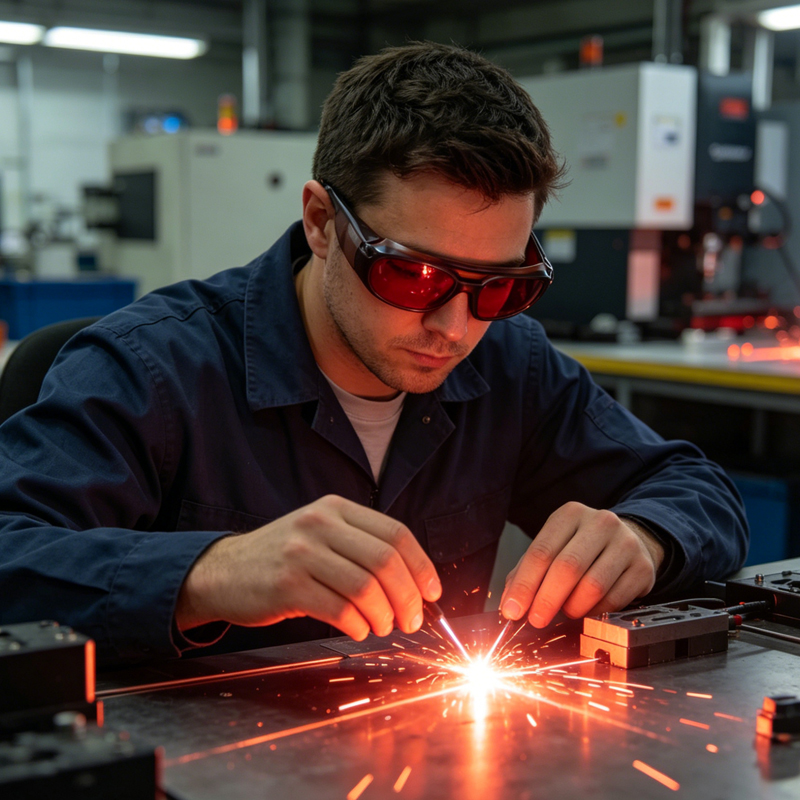
In modern industrial and workshop operations, eye injuries remain among the most common yet preventable workplace hazards. Safety managers frequently observe that ordinary prescription glasses or non-certified eyewear fail to provide adequate defense against impact or chemical exposure.
Common Failure Points of Standard Eyewear:
-
Insufficient Impact Resistance: Workers wearing substandard protection often suffer from corneal abrasions, chemical burns, or even permanent vision loss when facing high-speed debris.
-
The Pitfalls of Generic Designs: Standard safety glasses on the market often adopt generic designs that cannot accommodate different facial structures, leading to gaps in protection.
-
Poor User Experience: Many models fog up during use, lack adequate side protection, or scratch easily, which discourages workers from wearing them consistently.
The Inevitable Choice for Safety Upgrades: Modern workshop operations must require professional-grade safety glasses that offer optical clarity, comfortable fit for extended wear, and compatibility with other PPE (such as hard hats and hearing protection).
2. Professional Technical Standards and Material Advantages
Qualified safety glasses for workshop environments must follow strict international safety standards to guarantee stable protection.
Core Certification Standards
-
European Market: All safety glasses must comply with the EN 166 standard (Personal eye-protection - Specifications). Products must be tested and hold CE certification as required by EU regulations.
-
North American Market: Products must satisfy ANSI/ISEA Z87.1 requirements.
Performance and Protection Markings Under EN 166
EN 166 requires that both lenses and frames carry permanent markings indicating their specific protective properties:
| Marking Type | Code / Symbol | Protection Level & Meaning |
| Lens: Optical Class | Class 1 | Highest optical quality, approved for continuous daily use |
| Class 2 & 3 | Lower optical quality, strictly prohibited for long-duration work | |
| Lens: Impact Resistance | S | Increased robustness |
| F | Low-energy impact (resists particles at 45 m/s) | |
| B | Medium-energy impact (resists particles at 120 m/s) | |
| A | High-energy impact (resists particles at 190 m/s) | |
| Frame: Hazard Protection | 3 | Protection against liquid drops and splashes |
| 4 | Protection against large dust particles (>5 μm) | |
| 5 | Protection against gases and vapours | |
| 9 | Protection against molten metal and hot solids |
Key Testing Requirements: Compliant safety eyewear must feature additional lens enhancements marked as T (tested under extreme temperatures), K (scratch-resistant surface), or N (fog-resistant). Note that fine dust protection (particles <5 μm) is not covered by frame marking 5 alone—such protection requires a fully sealed goggle construction.
3. Types of Safety Eyewear for Workshops
Different workshop tasks introduce distinct hazards, requiring specific types of eye protection:
-
Safety Glasses: Basic impact-resistant eyewear equipped with side shields. They are ideal for general workshop tasks involving impact hazards from flying particles and offer comfort for prolonged wear.
-
Safety Goggles: These provide a completely sealed barrier around the eyes. They are essential for tasks involving liquid chemicals, heavy dust generation, or dangerous fine particles.
-
Face Shields: These provide full-face protection against high-impact hazards, chemical splashes, and molten metal. They are typically used in conjunction with safety glasses or goggles for layered protection.
Special Category Warning: Welding shields are a separate, independent product category under EN 166 and are not classified as ordinary safety glasses. They incorporate specialized filter lenses with specific shade numbers to protect against intense optical radiation (UV and IR) and sparks. They include fixed shield, flip-up, and hand-held welding protectors.
4. The Critical Importance of Optical Quality
The optical class of safety eyewear is a crucial factor that directly impacts worker health and productivity:
-
Optical Class 1 Lenses: Provide the highest optical quality with minimal distortion. They are strongly recommended for precision workshop tasks requiring all-day wear to prevent eye strain.
-
Optical Class 2 and 3 Lenses: Are strictly prohibited for continuous long-duration work. They must be limited to intermittent, short-term observation. Lower optical classes often cause visual fatigue, headaches, or compromised work accuracy.
5. Proper Selection and Use Guidelines
Selecting the right safety glasses for workshop use involves a systematic approach to workplace hazards:
-
Hazard Assessment: Identify the specific eye hazards present in each work area (chemical, mechanical, or radiation).
-
Impact Rating Matching: Ensure the impact rating (S, F, B, or A) matches the severity of potential flying debris in the environment.
-
Optical Evaluation: Prioritize Class 1 lenses for daily tasks to reduce eye strain and fatigue.
-
Fit and Features: Ensure a secure fit to prevent slipping, and check for vital additional features such as anti-fog (N) and anti-scratch (K) coatings.
6. Conclusion and Sourcing Advice
Safety glasses serve as a simple, highly effective, and cost-efficient barrier between a worker's eyes and the dangerous elements of an industrial environment. Compliance with standards such as EN 166 and ANSI/ISEA Z87.1 ensures that the equipment meets rigorous safety mandates.
For International Buyers and Procurement Managers: Maintaining workplace safety and regulatory compliance requires sourcing safety glasses from certified manufacturers. Always choose partners who provide a diverse range of products with documented compliance, clear lens/frame markings, and comprehensive technical support.