
 EN
EN



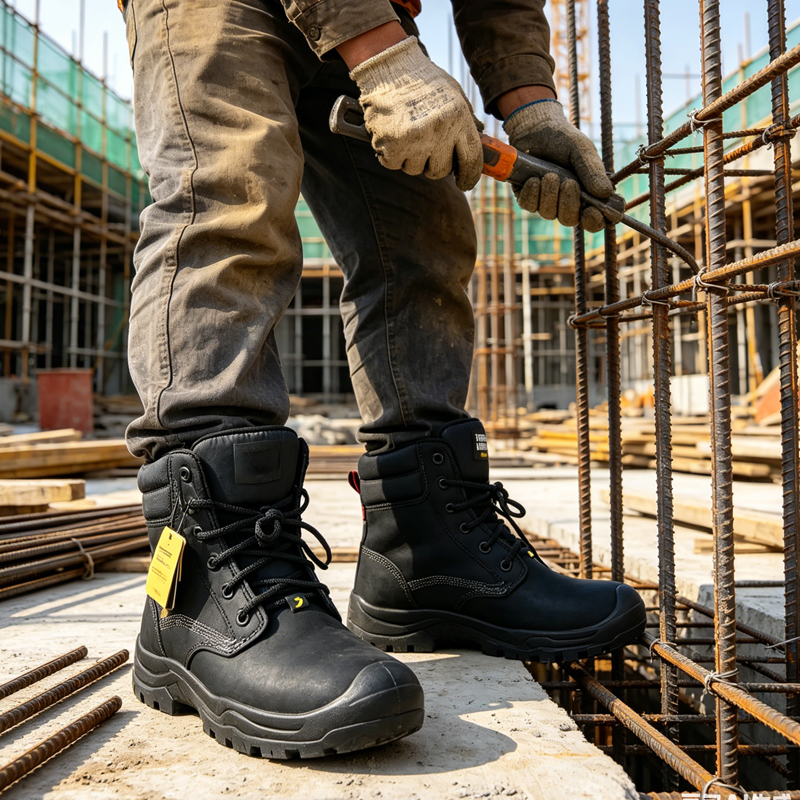
1. Core Demands for Foot Protection in Workshop Environments
In modern industrial and workshop operations, the feet are constantly exposed to a wide range of mechanical risks. Safety managers frequently observe that ordinary work shoes or non-certified footwear fail to provide adequate protection against heavy impacts or sharp punctures.
Common Failure Points of Standard Footwear:
-
Insufficient Impact and Puncture Resistance: Workers wearing substandard shoes often suffer from broken toes, deep puncture wounds, or crushing injuries from rolling machinery.
-
The Pitfalls of Generic Designs: Standard safety footwear on the market often adopts generic designs that cannot accommodate different foot shapes, causing discomfort during long shifts.
-
Poor User Experience: Many models are too heavy for prolonged wear, while others lack adequate ankle support, thermal insulation, or reliable slip resistance on oily surfaces.
The Inevitable Choice for Safety Upgrades: Modern workshop operations must require professional-grade safety work boots that offer certified impact protection, comfort for long hours of standing, and tested slip resistance.
2. Professional Technical Standards and Material Advantages
Qualified safety work boots for workshop environments must follow strict international safety standards to guarantee stable protection.
Core Certification Standards
-
European Market: Safety footwear must comply with the EN ISO 20345 standard (Personal protective equipment - Safety footwear). Products manufactured after 2024 are required to be certified under the updated EN ISO 20345:2022 edition and hold CE certification.
-
North American Market: Products must satisfy ASTM F2413 requirements.
Understanding the EN ISO 20345:2022 Protection Classes
The updated 2022 standard divides safety footwear into eight main protection classes based on construction material and hazard defense capabilities:
| Footwear Category | Protection Class | Core Protective Features |
| Leather-Upper Shoes | SB | Basic protection: Impact-resistant protective toecap + slip resistance |
| (Conventional safety footwear) | S1 | Adds anti-static properties and energy absorption in the heel area |
| S2 | Adds water-penetration and water-absorption resistance to S1 | |
| S3 | Adds sole puncture protection to S2 requirements | |
| Full-Rubber / Polymer | S4 | Waterproof design with protective toecap + anti-static + heel energy absorption |
| (Molded "water boots") | S5 | Adds sole puncture protection to S4 requirements |
| Enhanced Waterproof | S6 | Leather-upper safety footwear with advanced, comprehensive water resistance |
| (New 2022 Leather Classes) | S7 | Adds sole puncture protection to S6 requirements |
Important Marking Updates (P vs. PL vs. PS): Puncture protection is now categorized by the test nail size and insert material. Code P represents a metal insert tested with a 4.5mm nail; PL is a non-metal insert tested with a 4.5mm nail. The new code PS represents a non-metal insert tested with a finer 3.0mm nail. Note that PS is only suitable for light-duty, low-risk environments and is not recognized for heavy industrial or construction applications; buyers should prioritize P or PL for heavy-duty scenarios. Additionally, under the 2022 standard, slip resistance is now an upgraded basic requirement across all classes rather than an optional marking.
3. Toecap Materials: Steel vs. Composite vs. Aluminium
The protective toecap is the first line of defense against heavy falling objects. Choosing the right material requires understanding their distinct traits:
-
Steel Toecaps: Offer excellent impact and compression resistance with a slim profile. However, they are heavier and conduct thermal temperatures (heat and cold) easily.
-
Composite Toecaps (Non-Metal): Lightweight, non-conductive, and chemically inert. While they achieve the exact same standard EN safety ratings as steel in normal conditions, their impact resistance can be more noticeably affected by extreme cold. Therefore, they are highly effective but best suited for temperate or indoor environments.
-
Aluminium Toecaps: Provide a lightweight alternative to steel while maintaining robust impact resistance. They offer a great balance of comfort and safety, though they generally carry a higher manufacturing cost.
4. Selecting the Right Safety Boots for Workshop Hazards
Procuring the correct foot protection involves a systematic evaluation of workshop demands:
-
Hazard Identification: Audit the work area for specific mechanical risks such as sharp metal shards on the floor, falling components, heavy rolling carts, or chemical spills.
-
Match Protection Class: Select leather-upper styles (S1 to S3/S7) for standard industrial assembly lines, or full-polymer styles (S4/S5) for liquid-heavy environments.
-
Evaluate Toecap and Insole Inserts: Choose steel or PL non-metal configurations based on thermal exposure, weight preferences, and the severity of puncture risks.
-
Prioritize Fit and Certified Compliance: Ensure the footwear offers correct ergonomic support to prevent fatigue during long standing shifts, and verify a valid EN ISO 20345:2022 CE certificate.
5. Conclusion and Sourcing Advice
Safety work boots are an indispensable asset for shielding industrial workers from severe, life-altering foot injuries. With the implementation of the EN ISO 20345:2022 standard—which brings stricter slip resistance baselines and clear-cut definitions for waterproof leather footwear (S6/S7)—workplace safety managers have more precise tools than ever to secure their facilities.
For International Buyers and Procurement Managers: Securing workforce safety and ensuring regulatory compliance requires sourcing safety footwear from verified manufacturers. Always partner with suppliers who provide certified, up-to-date products backed by transparent technical specifications, clear safety class stampings, and proper test documentation.