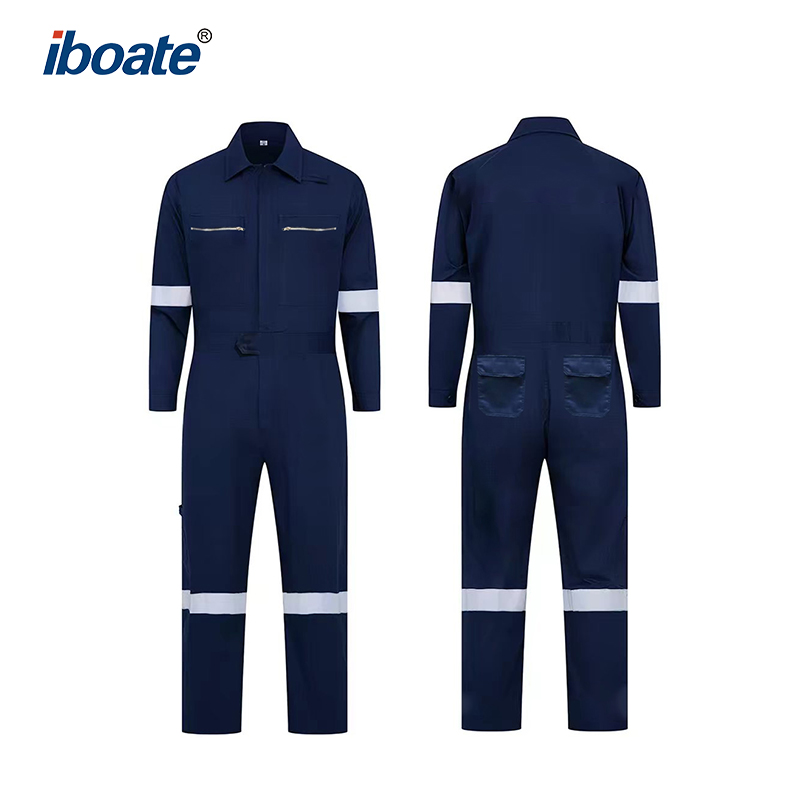
The jacket your crew wore five years ago might still pass a basic visual inspection. But does it meet updated EN ISO 20471 retroreflective area requirements? Does it handle both flash fire and arc flash exposure in dual-hazard zones? Can it go 50industrial washes without losing its hi-vis certification?
In 2026, workwear isn't just about covering up―it's a compliance document your workers wear every day.
The global workwear market was valued at 19.2billionin2025 ∗ ∗andisontracktoreach ∗ ∗28.1 billion by 2033 (GrandView Research). But the growth story isn't just volume―it's a fundamental shift in what procurement managers, safety leads,and contractors actually demand from a garment. Here are the five trends driving that shift on construction sites right now.
1. Hi-Vis Is Getting Smarter ― and Stricter
High-visibility workwear has always been a construction staple. What's changing in 2026 is the precision of the requirements and the gap between compliant and non-compliant garments.
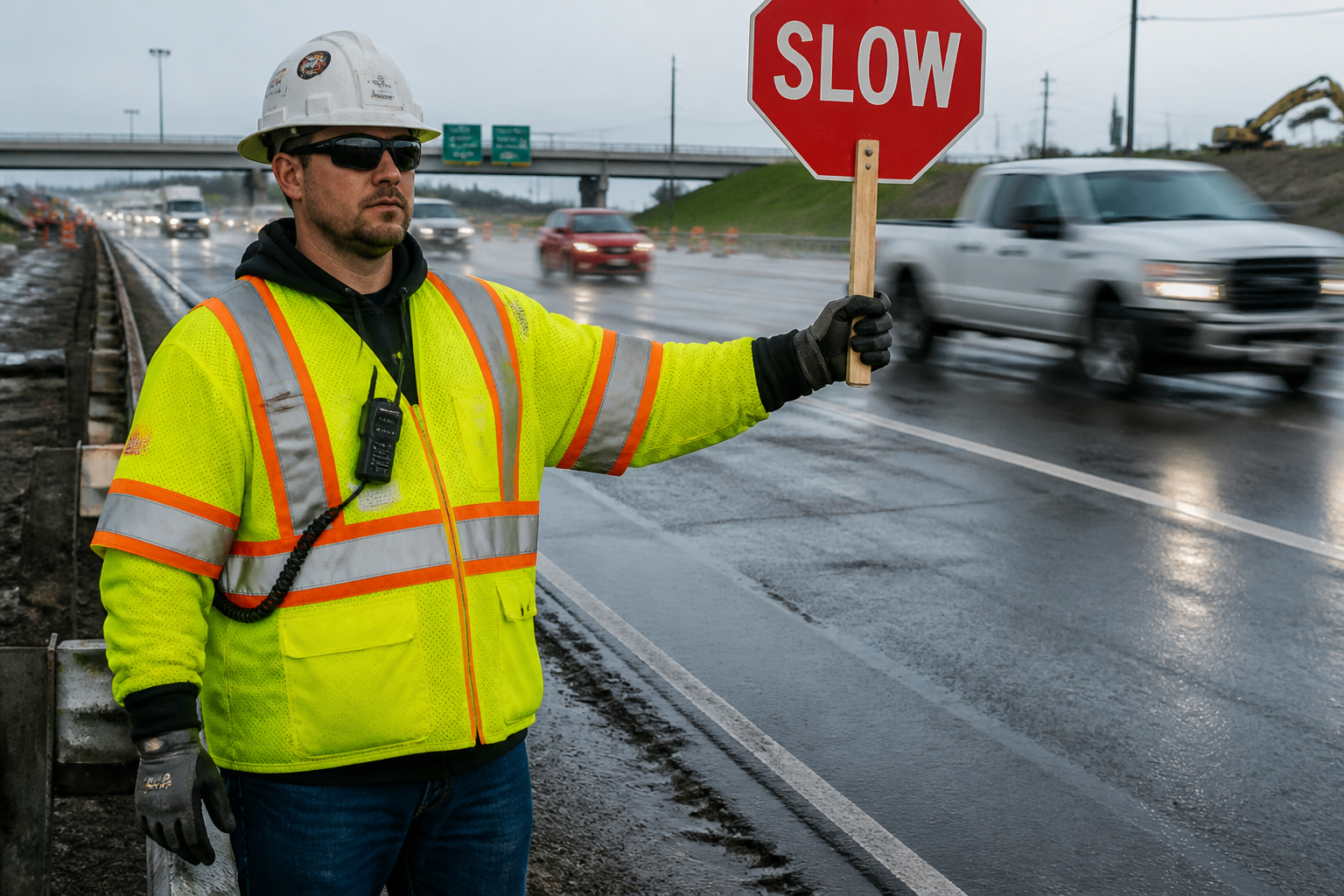
Both ANSI/ISEA 107 (the U.S. standard) and EN ISO 20471 (the European standard) have become sharper in specifying minimum retroreflective tape area, background material coverage, and garment class by work environment. A Class 2 vest that was acceptable for road flagging may no longer meet the spec for workers operating near high-speed traffic.
The U.S. hi-vis workwear market alone is projected to grow at a CAGR of 7% from 2026 to 2033―and much of that is compliance-driven replacement purchasing, not just new projects.
What actually changed for buyers:
- Garment class must now match the risk profile of the task, not just the project type
-
Documentation matters: suppliers need to provide test reports showing retroreflective performance after multiple wash cycles
- Combined hazard garments (hi-vis + FR, hi-vis + waterproof) are now standard expectations on multi-risk sites, not specialty orders
When evaluating workwear suppliers, ask for wash cycle test data alongside the initial certification. A jacket that loses retroreflective performance after 25 washes is a compliance liability, not a cost saving.
2. FR + Hi-Vis Combination Garments: No Longer Optional in Dual Hazard Zones
If your crews work in environments where flash fire, arc flash, or molten metal splash is a possibility and visibility is a concern utilities, oil & gas infrastructure builds, highway electrical work―the answer used to be two separate garments. In 2026,that's increasingly a red flag.
Dual-certified workwear combining NFPA 2112 (flash fire protection), NFPA 70E / ASTM F1506 (arc flash), and ANSI/ISEA 107 (hi-vis) into a single garment is now available from multiple manufacturers at scale. The performance tradeoff that used to exist―you could have FR or hi-vis brightness, not both―has largely been solved by advances in inherently FR fibers that can be woven or coated with fluorescent and retroreflective treatments without losing thermal protection ratings.
For procurement managers, the practical implication: A single dual-certified garment SKU can replace two separate line items, simplify your PPE policy documentation, and reduce the "wrong garment, wrong site" compliance error. It also reduces per-worker daily gear load―which sounds minor until you're managing 200 workers across 3 sites.
3. The Layering System Is the Product, Not the Single Jacket
One of the most significant shifts in how professional workwear is sold and bought in 2026 is the move from individual garment procurement to layering system procurement.
The concept is straightforward: a base layer (moisture-wicking, temperature-regulating), a mid layer (insulation, optional FR rating), and an outer shell (waterproof, hi-vis, wind-resistant) ― all designed to work together, with compatible sizing, compatible attachment points, and compatible certification stacking.
Why this matters operationally:
- Workers in variable climates (outdoor projects spanning seasons) need one system, not a drawer full of unmatched pieces
- Modular layering lets you scale up or down protection without replacing the entire outfit
- All-season workwear reduces the procurement cycle: one annual purchase instead of separate summer/winter buys
- Compatible systems reduce the risk of a worker mixing a non-certified mid layer under a certified outer shell and accidentally voiding the PPE performance
The jacket your supplier sells should have a clear answer to this question: "What does it stack with?" If they can't name compatible mid and base layers from their range, that's a supply chain gap worth flagging
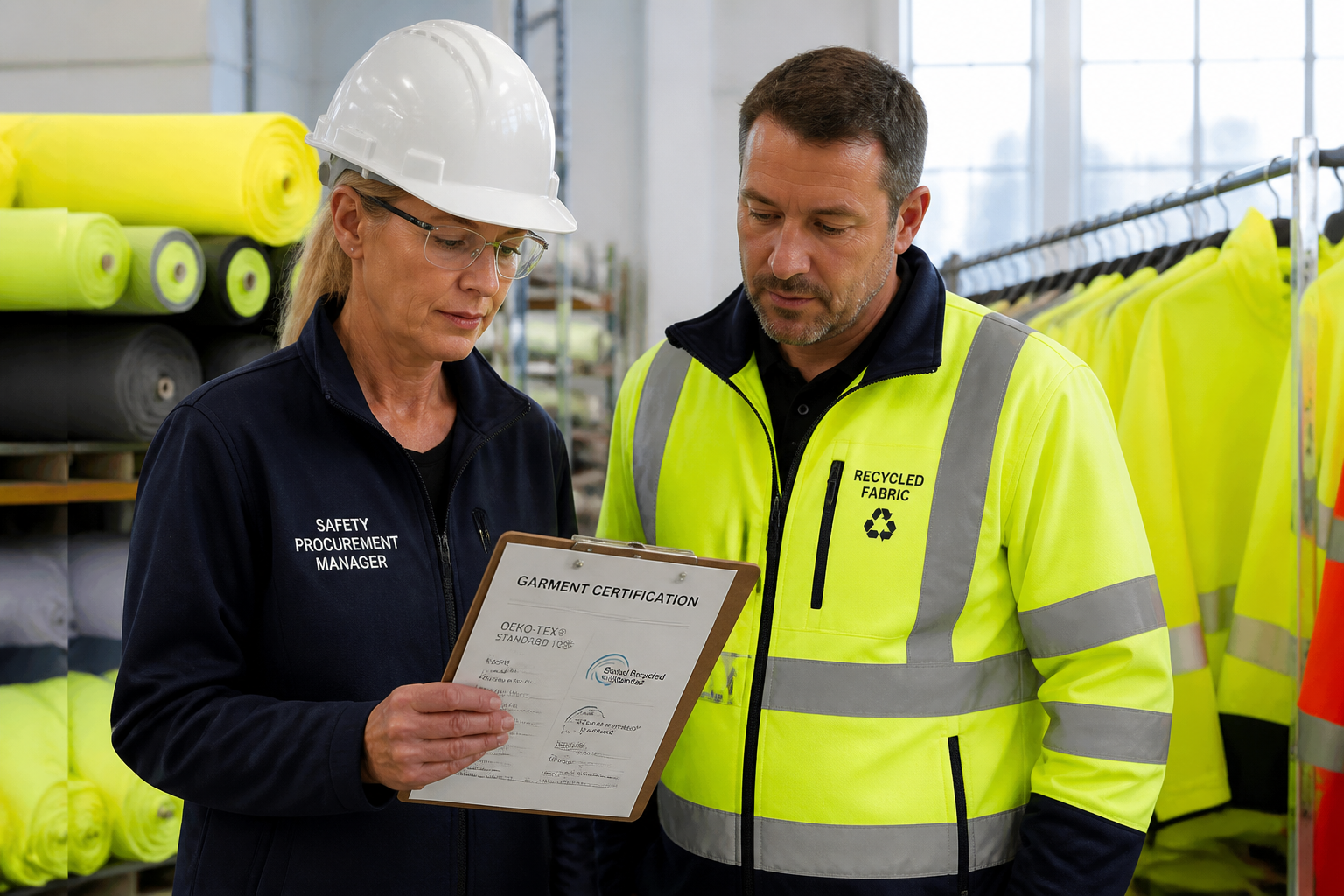
4. Sustainable Workwear Is Now an ESG Procurement Requirement
This one is moving faster than many buyers expected.
Driven by corporate sustainability mandates, EU supply chain due diligence regulations, and increasing pressure from end clients (especially in infrastructure and energy sectors), procurement teams are now being asked to justify workwear choices not just on price and performance―but on environmental footprint.
What "sustainable workwear" actually means in practice in 2026:
| Claim |
What to verify |
| "Recycled fabric" |
% recycled content, certifications (GRS, OEKO-TEX) |
| "Longer lasting" |
Published wash cycle durability data |
| "Reduced packaging" |
Packaging weight per unit, recyclability |
| "Responsible sourcing" |
Supplier audit reports, SMETA or equivalent |
The good news for buyers: modern recycled polyester and bio-based fiber technology has advanced to the point where EN ISO 20471-compliant hi-vis garments can be manufactured from recycled feedstock without sacrificing retroreflective or tensile performance. You don't have to choose between your ESG targets and your safety specs.
Budget reality: sustainable workwear typically carries a 5‒15% price premium at the unit level. At full program cost―factoring in longer replacement cycles, reduced waste disposal, and ESG reporting value―the math often closes.
5. Inclusive Sizing and Fit: The Compliance Issue Nobody Talks About
Here's the uncomfortable truth about a lot of construction workwear programs: the gear was designed for the average male worker of 30 years ago, and it shows.
In 2026, with construction workforces diversifying across gender, body type, and age, garment fit is a safety issue, not a comfort preference. An oversized jacket reduces mobility and increases snag risk. A vest sized for a male chest on a female worker may not meet minimum retroreflective area coverage requirements―making it technically non-compliant even if the garment itself is certified.
Leading workwear programs in 2026 are addressing this by:
- Offering gender-specific cuts with proportional retroreflective tape placement (not just smaller sizes of the same template)
- Expanding size ranges to XXXL and beyond without removing safety features
- Providing per-role fit options: slim-cut versions for equipment operators (reduced snag risk), reinforced versions for groundwork crews (knee and elbow zones)
For procurement managers building a compliant program: size range and fit variety should be part of your supplier RFQ, not an afterthought at delivery.
The 2026 Workwear Procurement Checklist
Before you sign off on your next workwear order, run through this:
-
Certification current? Check the specific revision year of ANSI/ISEA 107 or EN ISO 20471 your supplier certifies to Wash cycle data available? Retroreflective and FR performance after 25‒50 washes should be documented
- Dual-hazard covered? If sites involve both visibility and thermal risk, single-certification garments create a gap
- Layering system compatible? Ask what the jacket stacks with―base layer and mid layer should be specified
- Sustainable sourcing documented? Request GRS, OEKO-TEX, or equivalent certifications if ESG reporting is required
- Size range inclusive? Confirm gender-specific cuts and full size range before committing to a bulk order
Working With a Supplier Who Gets All of This
The best construction workwear suppliers in 2026 aren't just manufacturers―they're compliance partners. They can tell you which garment class fits which task profile, provide test documentation on demand, and help you build a layering program that actually works across seasons and site types.
If you're evaluating workwear options for your next project or looking to upgrade an existing PPE program, feel free to reach out to our team. We're happy to walk you through our current range―including hi-vis jackets, FR-rated coveralls, and multi-season layering systems with full certification documentation.
Have a specific compliance question for your region (ANSI, EN ISO, or local regulation)? Our technical team can help you match the right garment spec to your actual site requirements.
Sources: Grand View Research Workwear Market Report 2026‒2033; LinkedIn U.S. Hi-Vis Workwear Market Analysis 2026;
ANSI/ISEA 107-2020; EN ISO 20471:2013+A1:2016; NFPA 2112; Essential Workwear Trends 2026; Staff Uniforms Sustainable
Workwear Procurement Guide 2026.
 ×
×




 Hot News
 EN
EN