 ×

Quick answer: Arc flash PPE categories are the four protection levels (CAT 1 to CAT 4) used in the NFPA 70E table method. Each category sets a minimum arc rating for clothing: 4 cal/cm² for CAT 1, 8 cal/cm² for CAT 2, 25 cal/cm² for CAT 3 and 40 cal/cm² for CAT 4. The category comes from the equipment being worked on, not from the worker's preference, and the garments you buy must carry an arc rating equal to or higher than that minimum.
That is the short version. The rest of this guide explains where the category comes from, what the cal/cm² number on a label actually means, and how to turn a category on an equipment label into a complete, compatible PPE kit — the part where most purchasing mistakes happen.
An arc flash is the release of heat and light energy when current jumps through the air between conductors, or from a conductor to ground. The thermal energy that reaches a worker at a given distance is called incident energy, measured in calories per square centimetre (cal/cm²).
NFPA 70E, Standard for Electrical Safety in the Workplace, gives employers two ways to select arc flash PPE:
Incident energy analysis
1. – an engineering calculation (typically following IEEE 1584) that produces a specific cal/cm² value for each piece of equipment at a stated working distance.
The arc flash PPE category method
2. – a table-based method. You look up the equipment type, confirm it sits within the table's limits for available fault current, fault-clearing time and working distance, and read off a category from 1 to 4.
The two methods must not be mixed on the same piece of equipment. Either way, the result appears on the equipment's arc flash label, and that label is the starting point for PPE selection.
No. Category 0 was removed from the NFPA 70E tables. When the risk assessment shows arc flash PPE is needed, the minimum is now CAT 1 (4 cal/cm²).
NFPA issued the 2027 edition of NFPA 70E on 16 April 2026, effective 6 May 2026. Many site programmes are still written against the 2024 edition, where the PPE tables are numbered 130.7(C)(15)(a), (b) and (c). The category thresholds below are long-standing, but check table numbering and any changes against the edition your safety programme references.
|
PPE category |
Minimum arc rating of clothing |
Typical clothing system (summary) |
|
CAT 1 |
4 cal/cm² |
Arc-rated long-sleeve shirt and trousers or arc-rated coverall, plus arc-rated face shield or flash suit hood |
|
CAT 2 |
8 cal/cm² |
Arc-rated shirt and trousers or coverall, plus arc-rated face shield with balaclava, or flash suit hood |
|
CAT 3 |
25 cal/cm² |
Arc-rated flash suit system (jacket, trousers or coverall) with arc-rated hood and arc-rated gloves |
|
CAT 4 |
40 cal/cm² |
Arc-rated flash suit system with hood and arc-rated gloves, rated 40 cal/cm² or higher |
All categories also call for protective equipment such as a hard hat, safety glasses or goggles, hearing protection, leather footwear and appropriate gloves. The exact list for each category is in the NFPA 70E PPE table — use the table in your edition as the binding reference, and treat this summary as orientation only.
The category minimum is a floor. A 41 cal/cm² suit satisfies CAT 4 (≥40), and also every lower category. An 11 cal/cm² face shield satisfies CAT 2 (≥8) but not CAT 3 or CAT 4 on its own. When you mix components from different suppliers, the lowest-rated layer exposed to the arc determines the protection of that body area.
Every arc-rated garment should carry a single arc rating in cal/cm². That number comes from one of two test results:
ATPV (Arc Thermal Performance Value):
EBT (Energy Breakopen Threshold):
The garment is labelled with whichever value is reached first. So when you compare two jackets, compare the arc rating figure — not marketing words such as "heavy-duty" or "high-voltage".
ASTM F1506
IEC/EN 61482-2
APC 1 (4 kA) or APC 2 (7 kA)
A garment can be tested to both. If your workforce operates in both North American and European projects, ask your supplier which test reports exist for each garment. For a deeper comparison of these two clothing standards, see our guide to ASTM F1506 and EN 61482 standards for arc flash resistant clothing.
Many arc flash PPE purchases fail not because the suit is under-rated, but because the kit is incomplete or the parts are not compatible. Use this sequence.
Take the arc flash PPE category (or the incident energy and working distance) from the equipment label or the engineering study. Do not assign "CAT 2 for all electricians" across a site.
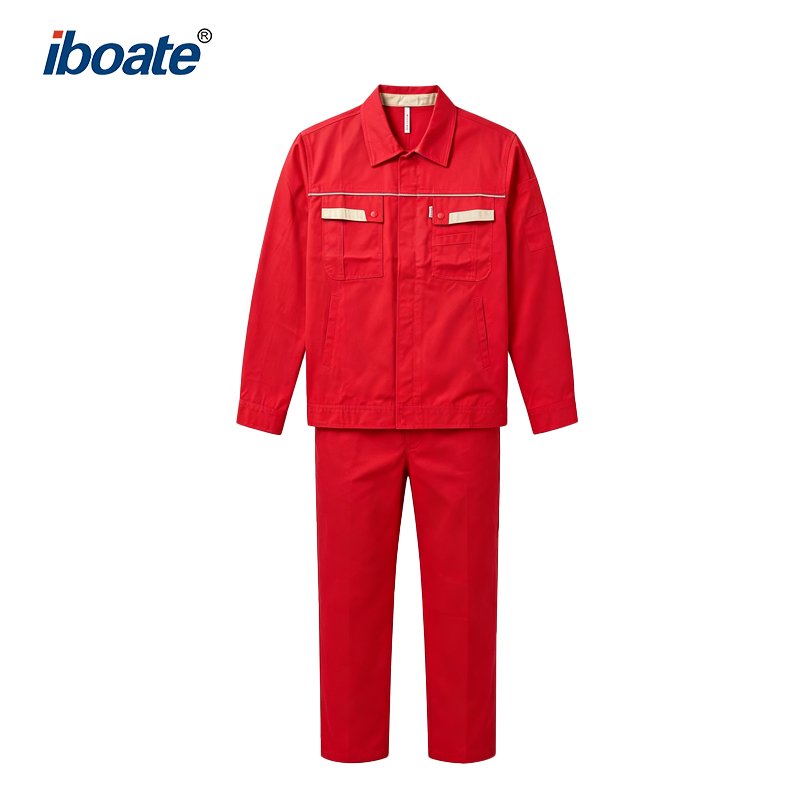
For CAT 1 and CAT 2, everyday arc-rated shirts, trousers or coveralls are usually practical. For CAT 3 and CAT 4, a flash suit system — jacket and bib trousers or a full coverall, plus hood — is normal because the energy levels are high enough that layering everyday garments becomes uncomfortable and inconsistent.
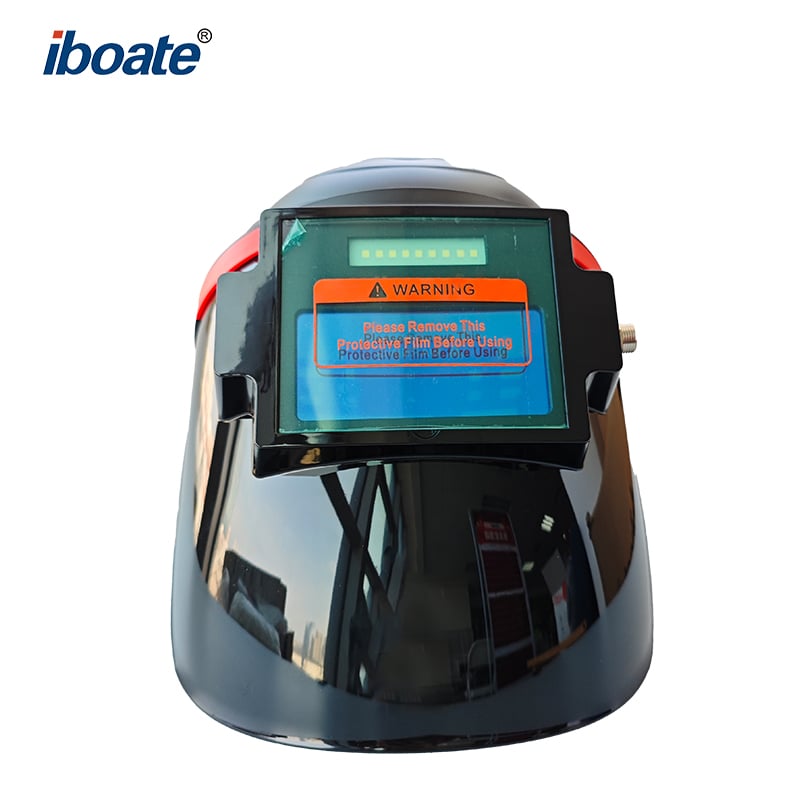
At CAT 1 and CAT 2, an arc-rated face shield combined with a balaclava is a common choice. At CAT 3 and CAT 4, an arc-rated flash suit hood is expected. Check that the face shield or hood window is rated, not just the frame.
Arc-rated gloves, or rubber insulating gloves with leather protectors where shock protection is also needed, cover the hands. Foot covers or leather work boots cover the feet. Note that arc flash protection and shock protection are separate assessments: an arc-rated suit does not make a worker safe against electric shock.
Under-layers must be non-melting (natural fibre or arc-rated). Laundering must follow the manufacturer's instructions; contaminated or damaged garments lose protection. Record each garment's arc rating on the issue log so that replacements match.
The following specifications come from Iboate's published product pages:
|
Product |
Published rating |
Category it can satisfy |
|
Iboate Level IV Arc Flash Protection Full Kit – 5 pieces: hood, two suit styles, foot covers and gloves; navy inherent flame-resistant fabric |
ATPV 41 cal/cm² |
CAT 4 (≥40) and all lower categories |
|
Iboate FCA8 Arc Flash Face Shield – tested to GS-ET 29 and NFPA 70E CAT 2 |
ATPV 11 cal/cm² |
CAT 1 and CAT 2 head/face protection |
A practical way to think about it: the FCA8 shield suits routine CAT 1–2 tasks such as panel inspection where the label permits; the Level IV kit is designed for CAT 3–4 tasks such as high-energy switchgear operation where a full flash suit system is required.
For complete site packages — arc-rated clothing plus electrical-rated hard hats, insulating gloves and 35kV insulated safety boots — see our Power & Aerial Work Protection Solutions.
PPE categories answer the question "what should the worker wear if exposure cannot be avoided?" They do not replace the first control. In the US, OSHA 29 CFR 1910.333(a)(1) requires live parts to be de-energised before work unless de-energising introduces additional hazards or is infeasible. A well-chosen arc flash kit protects people on the tasks that remain — such as testing for absence of voltage — when an electrically safe work condition is being established.
It is also worth remembering what the category table does not cover. The arc flash boundary — the distance at which incident energy falls to 1.2 cal/cm² — is about thermal exposure. The limited and restricted approach boundaries are about electric shock and are assessed separately. A worker inside both boundaries needs arc-rated clothing and shock protection such as rubber insulating gloves and insulated tools. Finally, the table method is only valid while the equipment stays within the stated fault current and clearing time limits; if the electrical system changes, the category on the label must be reviewed before the PPE list is reused.
CAT 2 requires clothing with a minimum arc rating of 8 cal/cm² and is typically met with arc-rated shirt and trousers plus a face shield and balaclava. CAT 4 requires a minimum of 40 cal/cm² and is typically met with a full flash suit system, hood and arc-rated gloves.
No. It satisfies the CAT 4 minimum in the table method. If an incident energy analysis shows a value above the suit's rating at the working distance, the suit is not sufficient, and the task should be re-planned or the equipment de-energised.
No. Flame-resistant clothing resists ignition and self-extinguishes, but only garments tested for arc performance and labelled with a cal/cm² value are arc rated.
You can, provided each component carries an arc rating equal to or higher than the required category and the interfaces (hood to jacket, sleeve to glove) overlap without gaps. Document each component's rating.
There is no single interval. Replace garments that are damaged, contaminated, or no longer meet the manufacturer's care conditions, and inspect before each use.
If you are building an arc flash PPE programme for a utility crew, a plant maintenance team or a distribution business, send us the arc flash categories on your equipment labels and the number of workers. Our team can propose a matched kit — suit, hood or face shield, gloves and footwear — and share the relevant test documentation. Contact us at [email protected] or through our contact page.
This guide is for general information. Always follow the edition of NFPA 70E, local regulations and the engineering study that apply to your site.
 Hot News
2026-11-11
2026-11-06
2026-10-22
2026-10-10
2026-09-28
2026-09-22
Trusted factory-direct supplier of certified industrial safety gear. CE/ANSI approved, exported to 60+ countries. Stable supply, flexible OEM/ODM.
701-702 Zhenghai Building, No.66 Zhujiang Road, Yantai Development Zone, Shandong Province
Copyright © 2026 by Shandong Iboate Security Technology Co., Ltd Privacy Policy 蜀ICP备17038468号

 EN