
 EN


ABS Material Advantages for Hard Hat Performance
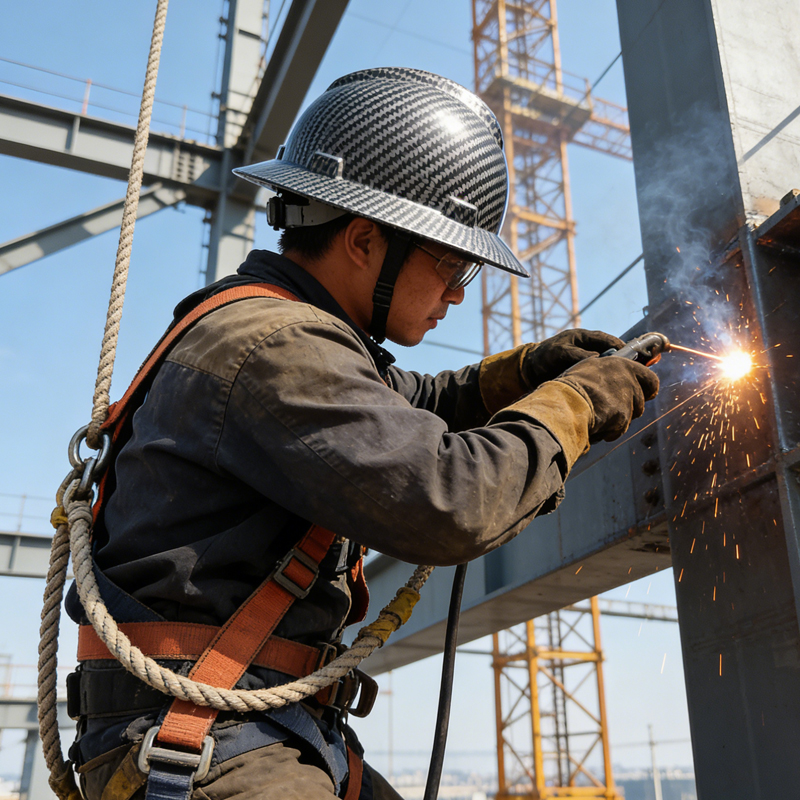
ABS is a widely used engineering thermoplastic for protective helmet shells because it offers a practical balance of impact toughness, stiffness, low density, moldability, and durability. For hard hat manufacturers and industrial safety equipment buyers, these properties can make ABS a suitable material for demanding workplace applications.
However, the performance of a hard hat cannot be determined by shell material alone. A finished helmet is a complete protective system that includes the shell, suspension or energy-absorbing components, adjustment system, and other approved accessories. For professional applications, buyers should evaluate the complete helmet against the applicable requirements of standards such as ANSI/ISEA Z89.1 rather than assuming that an ABS shell automatically provides a particular level of protection.
Superior Impact Resistance and Energy Management
One of the main advantages of ABS is its combination of stiffness and impact toughness. Compared with some more brittle plastics, properly formulated ABS can absorb and redistribute impact energy while maintaining structural integrity.
This property is important for hard hats because workers may encounter falling tools, components, debris, or other objects during construction, manufacturing, maintenance, and industrial operations. A well-designed ABS shell can help distribute impact forces over the helmet structure rather than concentrating them at a single point.
The actual impact performance, however, depends on more than the ABS resin itself. Resin grade, rubber modification, shell thickness, geometry, molding conditions, temperature, and the suspension system can all influence the performance of the finished helmet.
For this reason, an ABS hard hat should not be described as compliant simply because the raw material has good impact properties. The complete helmet must be designed and tested according to the requirements of the applicable head-protection standard.
Under ANSI/ISEA Z89.1, protective helmets are evaluated as finished products through standardized performance tests. Therefore, manufacturers should provide product-level test or certification information when customers require evidence of compliance.
Lightweight Design for Long Work Shifts
ABS has a relatively low density, which gives designers flexibility when developing lightweight protective helmet shells. A properly optimized shell can provide the required structural performance without adding unnecessary material.
Weight is an important consideration for workers who wear head protection throughout long shifts. Excessive helmet weight can contribute to discomfort, pressure points, and reduced user acceptance. A lightweight design, combined with a properly adjusted suspension system, can make the helmet more comfortable for extended use.
For B2B buyers, it is useful to evaluate the complete helmet weight rather than comparing the density of shell materials alone. Overall helmet weight is also affected by shell thickness, suspension components, adjustment mechanisms, chin straps, face shields, hearing protection, and other accessories.
A well-designed ABS hard hat can therefore provide a practical balance between protection and wearing comfort. This can encourage consistent PPE use without claiming that material density alone determines worker comfort or regulatory compliance.
Electrical Protection Depends on the Complete Helmet
ABS is electrically insulating, but an ABS shell should not automatically be described as providing electrical protection. Electrical classification is a property of the complete helmet and its tested design.
ANSI/ISEA Z89.1 classifies protective helmets according to their electrical performance. The commonly referenced classes are:
-
Class G: General-use helmets with limited electrical protection, proof-tested at 2,200 volts.
-
Class E: Electrical helmets intended for higher-voltage applications, proof-tested at 20,000 volts.
-
Class C: Conductive helmets that provide no electrical protection.
These test voltages should not be interpreted as the voltage at which a helmet is automatically safe for a worker. They are standardized test levels used to evaluate electrical performance under specified laboratory conditions.
For applications involving electrical hazards, buyers should therefore select a helmet with the appropriate electrical classification and verify the manufacturer's product documentation. Shell material alone is not sufficient evidence of Class G or Class E performance.
Other factors can also affect electrical performance in actual use, including contamination, moisture, aging, accessories, and the condition of the helmet. Helmets intended for electrical work should be inspected and maintained according to the manufacturer's instructions.
Type I vs Type II Hard Hats
Choosing between Type I and Type II protection should be based on the hazards present in the workplace rather than the material of the helmet shell.
Under ANSI/ISEA Z89.1:
-
Type I helmets are designed primarily to provide protection from impacts to the top of the head.
-
Type II helmets provide protection against top impact as well as lateral or side impacts.
Type II protection can be particularly valuable in environments where workers may experience impacts from multiple directions. Construction sites, industrial facilities, maintenance areas, and other workplaces with complex movement patterns may expose workers to hazards that are not limited to objects falling directly from above.
The internal design of a Type II helmet can include features intended to improve lateral impact performance, but the exact construction varies between manufacturers and models. Buyers should rely on the helmet's certified or documented classification rather than assuming that a particular suspension design automatically makes a helmet Type II.
Hazard assessment should remain the starting point. Employers should identify the potential sources and directions of head impact before selecting the appropriate helmet type.
Low-Profile ABS Hard Hats for Confined Work Areas
Low-profile helmet designs are increasingly used in applications where workers operate in restricted spaces or around equipment with limited overhead clearance.
The moldability of ABS allows manufacturers to develop different shell geometries while maintaining controlled wall thickness, structural features, and ergonomic designs. A lower-profile helmet may reduce unnecessary bulk and can be useful when workers frequently move around machinery, scaffolding, vehicles, or other structures.
However, a low-profile design should not automatically be described as ANSI compliant. Compliance depends on the complete finished helmet and its tested configuration.
Accessory compatibility is also important. For example, a manufacturer-approved chin strap may help keep the helmet properly positioned during awkward working positions or certain movements. However, accessories should only be used when they are approved or specified for the particular helmet model.
For B2B procurement, buyers should confirm that the low-profile configuration, suspension system, and accessories are part of the manufacturer's approved product configuration.
ABS Shell and Suspension System Work Together
A hard hat is not simply an ABS shell. The shell and suspension system work together to manage impact forces and maintain the helmet's position on the worker's head.
In a conventional hard hat, the suspension creates space between the shell and the user's head. This structure helps position the helmet correctly and contributes to the overall impact-protection system.
Some modern safety helmets may also incorporate additional energy-absorbing liners or other components. These designs should be evaluated according to the manufacturer's tested configuration rather than assuming that every ABS helmet uses the same impact-management mechanism.
The performance of the suspension system is also affected by proper adjustment. A helmet that is too loose, incorrectly positioned, or used with a damaged suspension may not provide the intended level of protection.
For manufacturers and distributors, this makes suspension quality, adjustment range, replacement availability, and accessory compatibility important purchasing considerations alongside shell material.
Verifying ANSI/ISEA Z89.1 Compliance
When purchasing ABS hard hats for professional use, buyers should verify the markings and documentation for the complete helmet.
A properly marked helmet should provide information required by the applicable standard and manufacturer, such as the manufacturer's identification, applicable standard information, helmet type, electrical class where applicable, and other required or product-specific markings.
Buyers should not use the presence of the word "ABS" as evidence of compliance. Similarly, a helmet should not be considered compliant solely because the manufacturer claims that the raw ABS material has high impact strength or electrical insulation properties.
If markings are missing, illegible, inconsistent with the product documentation, or difficult to verify, procurement teams should contact the manufacturer or supplier before placing the product into service.
Depending on the applicable standard and product configuration, additional markings may indicate optional performance characteristics or approved features. These markings should always be interpreted according to the relevant standard and the manufacturer's documentation rather than treated as universal requirements for every hard hat.
Inspection, Maintenance, and Service Life
Even a well-designed ABS hard hat requires regular inspection. Protective performance can be affected by cracks, deformation, excessive wear, chemical exposure, ultraviolet exposure, heat, or deterioration of the suspension system.
Workers should inspect the shell and suspension before use and follow the manufacturer's instructions for cleaning, storage, replacement, and service life.
The suspension should receive particular attention because stretched, damaged, or improperly installed components can affect helmet fit and performance. Accessories should also be checked to ensure that they remain compatible with the helmet.
A hard hat that has experienced a significant impact should be evaluated according to the manufacturer's replacement guidance, even if visible damage is limited.
For industrial buyers, maintaining records of helmet models, replacement parts, inspection procedures, and manufacturer instructions can help support consistent PPE management across multiple work sites.
Frequently Asked Questions About ABS Hard Hats
Is ABS a good material for hard hats?
ABS can be a suitable material for hard hat shells because of its combination of impact toughness, stiffness, relatively low density, and manufacturing flexibility. However, the performance of a hard hat depends on the complete helmet design and testing, not the ABS material alone.
Does ABS provide electrical protection?
ABS itself is electrically insulating, but an ABS shell does not automatically make a helmet electrically rated. Electrical protection is determined by the performance and classification of the complete helmet. For electrical applications, buyers should verify the appropriate Class G or Class E rating and the manufacturer's documentation.
What is the difference between Type I and Type II hard hats?
Type I helmets are designed primarily for top-impact protection, while Type II helmets provide protection against both top and lateral impacts. The appropriate type should be selected according to the hazards identified in the workplace.
Can ABS hard hats be used in cold environments?
Some ABS formulations can retain useful impact toughness at relatively low temperatures, but low-temperature performance varies by resin formulation and finished helmet design. Buyers working in cold environments should check the manufacturer's tested temperature range and applicable product markings rather than assuming that every ABS helmet performs identically.
How can I verify whether an ABS hard hat is compliant?
Check the helmet's markings, product documentation, and manufacturer's certification or test information. The key point is to verify the compliance of the complete helmet configuration, including its shell, suspension, and applicable accessories, rather than relying on the material name alone.
Does a heavier hard hat provide better protection?
Not necessarily. Helmet protection depends on the overall design, materials, geometry, suspension system, and tested performance. A properly engineered lightweight helmet can provide effective protection while improving wearer comfort.
Conclusion
ABS offers hard hat manufacturers a useful combination of impact toughness, stiffness, relatively low density, and design flexibility. These characteristics make ABS a practical material for protective helmet shells across construction, manufacturing, utilities, maintenance, and other industrial applications.
However, professional PPE selection should focus on the performance of the finished helmet rather than making direct assumptions from the raw material. Impact protection, electrical classification, Type I or Type II performance, suspension design, accessory compatibility, and product-level testing all contribute to the final protection system.
For B2B buyers, the most reliable approach is to evaluate the complete ABS hard hat against the applicable ANSI/ISEA Z89.1 requirements, confirm the manufacturer's documentation, and select the helmet according to the actual hazards of the workplace. This provides a more accurate basis for procurement than relying on generic material claims or unsupported performance figures.
Table of Contents
- ABS Material Advantages for Hard Hat Performance
- Superior Impact Resistance and Energy Management
- Lightweight Design for Long Work Shifts
- Electrical Protection Depends on the Complete Helmet
- Type I vs Type II Hard Hats
- Low-Profile ABS Hard Hats for Confined Work Areas
- ABS Shell and Suspension System Work Together
- Verifying ANSI/ISEA Z89.1 Compliance
- Inspection, Maintenance, and Service Life
- Frequently Asked Questions About ABS Hard Hats
- Conclusion