
 EN



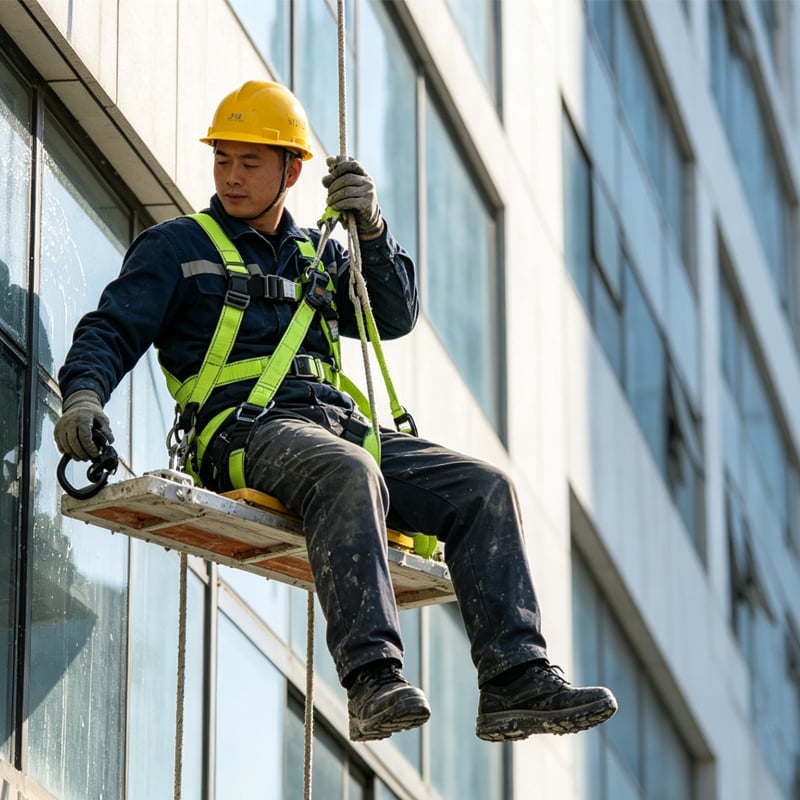
Engineering a High-Altitude Fall Protection Harness: Core Design Principles
High-altitude work environments expose workers and fall protection equipment to demanding conditions, including extreme weather, prolonged outdoor exposure, complex movement patterns, and elevated fall risks. A reliable fall protection harness must be engineered as a complete safety system that combines durable materials, proper load distribution, ergonomic fit, and compatibility with other fall protection equipment.
For tower climbing, wind turbine maintenance, telecommunications work, and industrial access applications, the performance of a full body harness depends not only on the strength of individual components but also on how the harness manages forces during a fall event while maintaining worker stability and comfort.
Thermal Stability and UV-Resistant Materials for Extreme Elevation Environments
At high elevations, harness materials may experience prolonged ultraviolet exposure, temperature fluctuations, moisture, dust, and mechanical abrasion. Selecting suitable webbing materials is therefore essential for maintaining long-term reliability.
High-tenacity polyester is widely used in fall protection harness webbing because it provides good UV resistance, low moisture absorption, dimensional stability, and reliable strength retention under outdoor conditions. Compared with nylon, polyester generally offers better resistance to ultraviolet degradation and maintains more stable performance when exposed to repeated weather cycles.
However, actual harness performance depends on the complete webbing construction, including fiber type, weave structure, coatings, stitching patterns, and manufacturing quality. Material properties alone cannot determine whether a harness meets fall protection requirements.
Accelerated weathering evaluations, such as testing conducted according to ASTM G154 for fluorescent UV exposure, are commonly used to assess the durability of polymer materials under controlled laboratory conditions. Additional evaluations may include abrasion resistance, tensile strength retention, and environmental conditioning to verify suitability for outdoor applications.
|
Material |
UV Resistance |
Moisture Behavior |
Typical Characteristics for Fall Protection Use |
|
UV-stabilized Polyester |
High |
Low moisture absorption |
Good outdoor durability, dimensional stability, and weather resistance |
|
Nylon |
Moderate |
Higher moisture absorption |
High flexibility and toughness but more sensitive to UV exposure |
For workers operating on communication towers, wind turbines, bridges, and other exposed structures, choosing a harness made from properly engineered materials helps maintain consistent performance throughout the equipment service life.
Manufacturers may also apply protective finishes or treatments to improve resistance against dirt, moisture, and abrasion. These treatments are designed to support webbing durability but must not replace proper inspection and maintenance procedures.
Load-Distribution Architecture to Prevent Suspension Trauma During Prolonged Arrest
A fall arrest event can leave a worker suspended in a harness while waiting for rescue. Prolonged suspension may contribute to suspension trauma, also known as orthostatic intolerance, where restricted movement and body positioning can affect normal blood circulation.
Modern full body harnesses are designed to distribute loads across stronger areas of the body while reducing concentrated pressure on soft tissues. Key design elements include:
- Wide, supportive leg loops
- Properly positioned shoulder straps
- Sub-pelvic support elements
- Adjustable chest and torso straps
- Rescue and positioning compatibility where applicable
During a fall arrest, the dorsal attachment element is designed to maintain the worker in a controlled upright position when properly fitted. Correct adjustment is critical because an improperly fitted harness may shift the worker into an uncomfortable or unsafe posture after a fall.
Many professional harnesses incorporate suspension relief straps or trauma relief devices. These allow a suspended worker to place weight on their legs periodically, helping reduce pressure caused by prolonged hanging.
However, relief devices are only one part of suspension trauma prevention. Effective rescue planning, rapid retrieval procedures, worker training, and emergency response preparation remain essential components of a complete fall protection program.
Application-Specific Fall Protection Harness Configurations
A fall protection harness should be selected according to the work environment, connection method, movement requirements, and rescue conditions. Different applications create different challenges, including limited anchorage options, vertical climbing demands, and exposure to dynamic movement.
Telecom Tower Climbing: Modular Anchorage Points and SRL Compatibility
Telecommunication tower workers often perform vertical climbing operations where maintaining continuous connection to an approved anchorage system is essential.
A harness used for tower climbing may include multiple attachment elements, such as:
- Dorsal attachment element for fall arrest systems
- Sternal attachment element where permitted for specific systems
- Side positioning attachment elements for work positioning applications
These attachment locations allow workers to connect different components according to the task requirements while maintaining appropriate fall protection practices.
For climbing applications, harness compatibility with self-retracting lifelines (SRLs), climbing systems, and approved connectors is an important selection factor. SRLs are designed to limit fall distance by automatically paying out and retracting lifeline material, helping reduce free-fall distance when properly installed.
However, SRL performance depends on factors including:
- Anchor location
- Lifeline orientation
- User movement
- Device specifications
- Manufacturer installation requirements
Workers should always verify that the harness, SRL, connectors, and anchorage systems are compatible as part of a complete fall protection system.
Modern tower climbing harnesses may incorporate adjustable attachment points, lightweight components, and ergonomic padding to improve mobility during long-duration climbing tasks.
Wind Turbine Maintenance: Dynamic Movement and Rescue Considerations
Wind turbine maintenance presents unique fall protection challenges due to confined access areas, vertical ladders, elevated platforms, and limited rescue access.
A suitable fall protection harness for wind turbine applications should support:
- Vertical climbing protection
- Work positioning requirements
- Emergency rescue operations
- Compatibility with turbine-specific access systems
Unlike traditional industrial environments, turbine technicians may work inside towers, nacelles, and hub areas where movement space is restricted. Harness designs with multiple adjustment points and optimized padding can improve comfort while allowing workers to maintain correct positioning.
Rescue considerations are especially important in wind turbine environments. A harness may include designated rescue attachment points or features that support controlled retrieval when used with compatible rescue equipment.
Tool loops and accessory holders may improve equipment organization, but they are not designed for fall arrest loads and must never be used as personal anchorage points.
For turbine maintenance teams, selecting a harness involves evaluating not only fall arrest performance but also compatibility with the complete access, positioning, and rescue system used at the facility.
Table of Contents
- Engineering a High-Altitude Fall Protection Harness: Core Design Principles
- Thermal Stability and UV-Resistant Materials for Extreme Elevation Environments
- Load-Distribution Architecture to Prevent Suspension Trauma During Prolonged Arrest
- Application-Specific Fall Protection Harness Configurations
- Telecom Tower Climbing: Modular Anchorage Points and SRL Compatibility
- Wind Turbine Maintenance: Dynamic Movement and Rescue Considerations