
 EN
EN



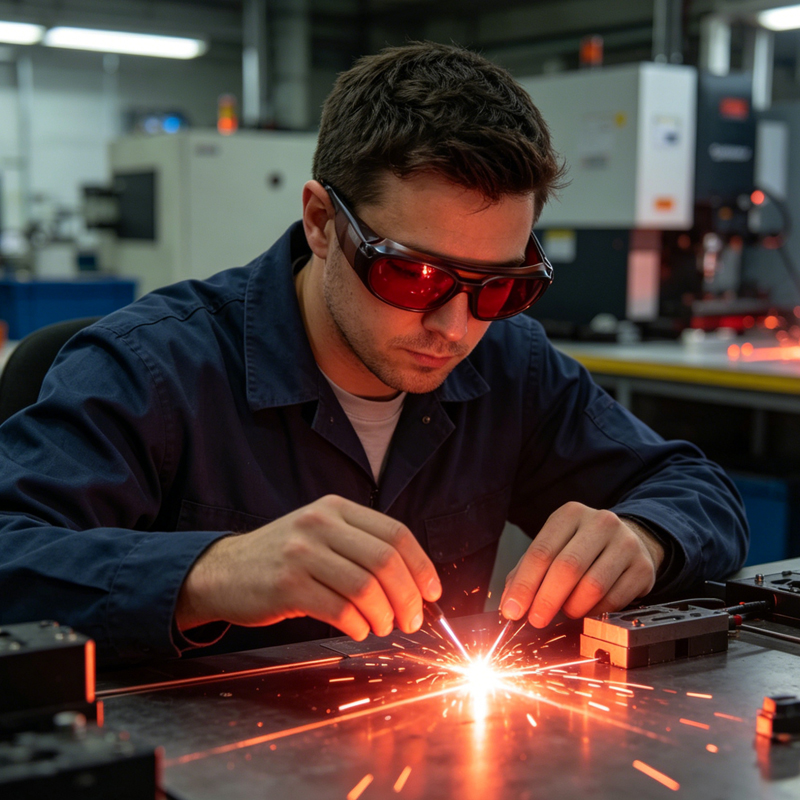
Laser technology has become an essential part of modern manufacturing, research, and industrial processing. From laser cutting and welding to laser marking and precision inspection, laser systems provide excellent accuracy, efficiency, and productivity across many industries.
However, as laser equipment becomes more powerful and widely used, the risk of accidental eye exposure has also increased. Direct laser exposure, reflected beams, and scattered radiation may create serious hazards to operators if appropriate safety measures are not implemented.
Laser safety glasses are an important part of a complete laser protection system. They are specially designed with optical filters that reduce exposure to specific laser wavelengths and help protect the eyes during normal industrial operations. However, protective eyewear should always be considered as a secondary safety measure. Proper engineering controls, laser enclosure systems, and safe operating procedures remain the primary methods for controlling laser hazards.
For industrial users, selecting the correct laser protective eyewear requires more than simply choosing a product based on appearance. The protection level must match the actual laser application, including wavelength, power output, operating environment, and possible exposure conditions.
The Role of Laser Safety Glasses in Industrial Laser Applications
In many industrial environments, workers may operate close to laser equipment for extended periods. During processes such as laser cutting, welding, marking, or maintenance operations, accidental reflections or scattered laser energy may create potential eye exposure risks.
Laser safety glasses provide additional protection by reducing the amount of laser radiation that reaches the eyes. The lens material is designed to absorb or block specific wavelengths while maintaining sufficient visibility for operators to perform their tasks effectively.
Different laser systems require different protection solutions. For example, fiber lasers, CO₂ lasers, and diode lasers operate at different wavelengths, meaning the selected eyewear must be compatible with the specific laser source. A pair of glasses designed for one wavelength range may not provide suitable protection for another laser application.
Therefore, professional laser protection solutions should always be selected according to the actual working conditions rather than using a universal product for all environments.
Key Technical Factors When Selecting Laser Safety Glasses
One of the most important factors when choosing laser safety glasses is wavelength compatibility. Every laser system produces energy at a specific wavelength, and protective eyewear must be designed to filter that wavelength effectively.
For example, fiber lasers commonly operate around the 1064 nm wavelength range, while CO₂ lasers typically operate at approximately 10.6 μm. Because these laser sources produce different types of optical radiation, they require different protective filter technologies.
Before selecting laser protective eyewear, users should understand the laser type, operating wavelength, and possible exposure conditions. This ensures that the selected glasses provide appropriate protection for the intended application.
Another important factor is optical density, commonly known as OD. Optical density indicates how effectively the lens reduces laser transmission at a specific wavelength. A higher OD value means the lens provides stronger attenuation of laser energy.
For example, laser safety glasses with OD5 provide significantly higher attenuation than glasses with OD3. However, the required OD level depends on factors such as laser power, beam characteristics, exposure duration, and workplace conditions. Selecting an appropriate OD value requires evaluating the actual laser hazard rather than simply choosing the highest available protection level.
In addition to protection performance, visible light transmission is also an important consideration. Industrial workers often need to perform precise operations while wearing laser glasses. If the lens significantly reduces visibility or creates discomfort, workers may be less likely to wear the equipment correctly over long periods.
High-quality laser safety glasses should provide a balance between optical protection, visual clarity, comfort, and durability.
Laser Safety Standards and Compliance Requirements
Professional laser protective eyewear should be selected according to recognized laser safety standards. These standards provide guidance for evaluating protection performance and ensuring that eyewear is suitable for specific laser applications.
In the United States, ANSI Z136.1 is widely referenced as a laser safety standard. It provides guidance for laser hazard evaluation and protective measures, including considerations for selecting appropriate laser eyewear based on wavelength and required protection level.
For European markets, EN 207 is an important standard related to laser protective eyewear. It defines requirements for eyewear performance against different laser wavelengths and exposure conditions.
When purchasing laser safety glasses, companies should not only check whether the product meets a specific standard but also confirm whether the protection level matches their actual laser equipment and working environment.
Choosing the Right Laser Protective Eyewear for Different Applications
Industrial laser applications vary significantly, and each environment may require different protective solutions.
In laser cutting and welding operations, workers are often exposed to high-power laser systems used for metal processing. In these applications, laser safety glasses need to provide suitable wavelength protection while maintaining good visibility and wearing comfort.
Laser marking applications may involve smaller laser systems, but operators can still face potential exposure risks during equipment adjustment, maintenance, or material handling. Suitable eyewear helps provide an additional layer of protection during these activities.
In laboratories and research environments, users may work with multiple laser sources and adjustable operating conditions. Lightweight designs, optical clarity, and multi-wavelength protection may become important considerations.
Because laser hazards vary between industries, selecting the right eyewear requires understanding the complete application environment.
The Importance of Comfort and Long-Term Usability
Safety performance is the most important requirement for laser safety glasses, but comfort also plays an important role in practical workplace protection.
Industrial workers may need to wear protective eyewear for several hours during daily operations. Heavy frames, poor ventilation, or reduced visibility may affect user acceptance and reduce consistent usage.
Professional laser protective eyewear manufacturers focus on improving frame design, lens clarity, weight balance, and wearing comfort while maintaining required protection performance.
A protective product can only provide its intended value when workers are willing and able to use it correctly.
Building Safer Workplaces with Reliable Laser Protection Solutions
As laser technology continues expanding into manufacturing, research, and industrial automation, the demand for reliable laser safety glasses continues to increase.
Choosing the right laser protective eyewear requires a comprehensive understanding of laser wavelength, optical density, safety standards, and workplace conditions. Companies should evaluate protection requirements carefully instead of selecting products based only on basic appearance or price.
IBOATE focuses on providing professional optical protection solutions for industrial applications. Through product development, quality control, and attention to customer requirements, IBOATE supports global customers seeking reliable laser safety glasses and protective equipment solutions.
Effective laser safety is not achieved through a single product alone. It requires the combination of suitable protective eyewear, proper safety management, and responsible operating practices to create safer and more efficient workplaces.
Table of Contents
- The Role of Laser Safety Glasses in Industrial Laser Applications
- Key Technical Factors When Selecting Laser Safety Glasses
- Laser Safety Standards and Compliance Requirements
- Choosing the Right Laser Protective Eyewear for Different Applications
- The Importance of Comfort and Long-Term Usability
- Building Safer Workplaces with Reliable Laser Protection Solutions